

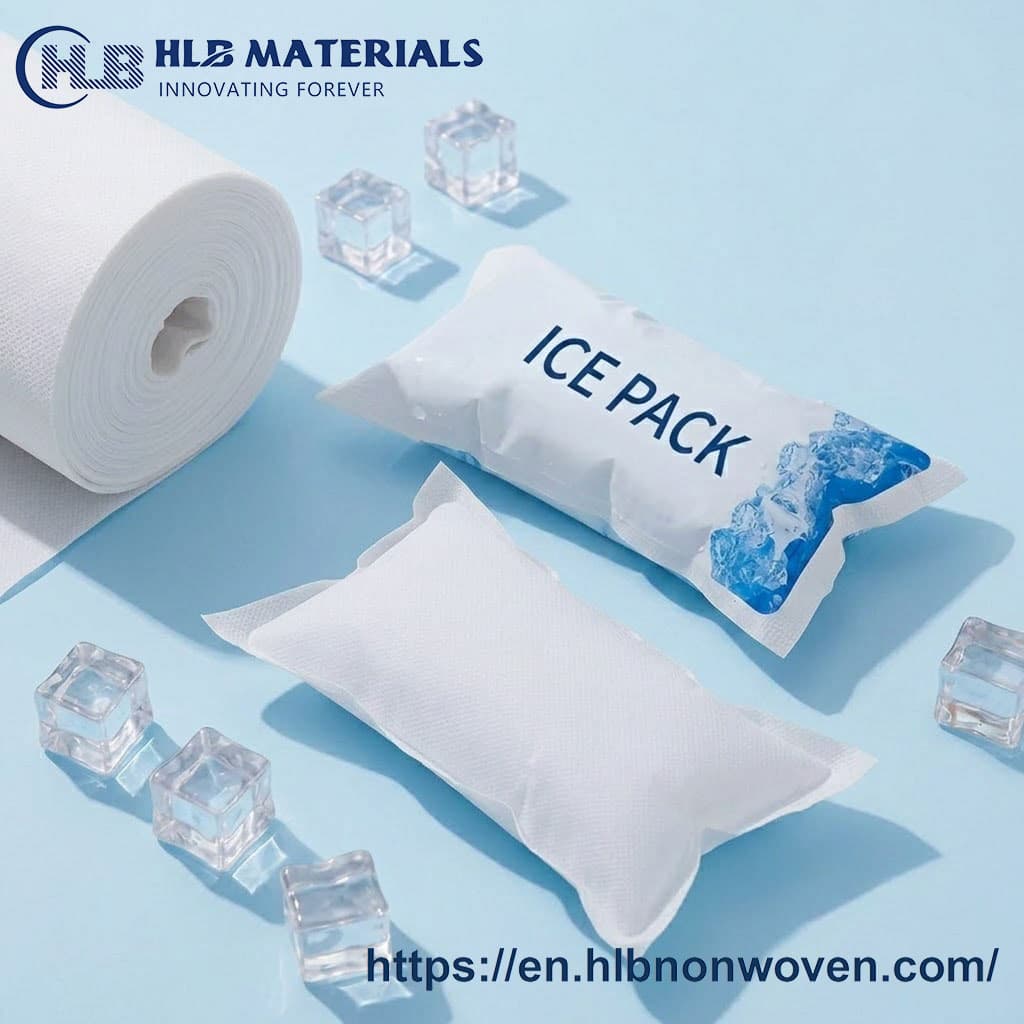
Why Bi-Component Nonwoven Fabric Is an Ideal Material for Ice Gel Packs
A Smarter Material Choice for Modern Cold Chain Packaging
As the demand for reliable cold chain transportation continues to grow, manufacturers are placing greater emphasis on the performance of packaging materials used in ice gel packs. Beyond the cooling gel itself, the outer layer must provide secure sealing, excellent durability, and a clean appearance.
Bi-Component nonwoven fabric has become an increasingly popular solution for these requirements. By combining two different polymers into a single fiber structure, it delivers enhanced bonding performance, mechanical strength, and processing efficiency, making it an excellent choice for ice gel pack production.
Why Choose Bi-Component Nonwoven Fabric for Ice Gel Packs?
1. Outstanding Heat-Sealing Performance
Bi-Component nonwoven materials are engineered with a sheath-core fiber structure that enables efficient and uniform heat sealing. This helps create strong seams, minimizes leakage risks, and improves production consistency for ice gel pack manufacturers.
2. Excellent Strength and Durability
Compared with conventional materials, Bi-Component nonwoven fabric offers superior tensile strength, tear resistance, and dimensional stability. Even during filling, transportation, and repeated handling, the material maintains its integrity and reliable performance.
3. Smooth Surface with Excellent Printability
The uniform fiber distribution provides a clean and smooth surface that supports high-quality printing of logos, instructions, and customized branding. This makes it ideal for OEM and private-label ice gel pack applications.
4. Suitable for Temperature-Sensitive Packaging
Bi-Component nonwoven fabric performs reliably in refrigerated and cold-chain environments, making it suitable for packaging fresh food, seafood, pharmaceuticals, vaccines, and other temperature-sensitive products.
HLB Recommendation: PE/PET Bi-Component Nonwoven Fabric
For customers seeking a balance between sealing performance and mechanical strength, HLB recommends its PE/PET Bi-Component Nonwoven Fabric for ice gel pack applications.
Key features include:
· 50–60gsm weight options suitable for ice gel pack production
· Excellent heat sealability for secure edge bonding
· High tear resistance and dimensional stability
· Low-lint, smooth surface for premium appearance
· Good printability for customized branding
· Suitable for food cold chain and healthcare packaging applications
The PE sheath enables efficient thermal bonding, while the PET core contributes strength and structural stability, making this combination particularly well suited for demanding cold-chain packaging requirements.
Typical Applications
HLB's PE/PET Bi-Component Nonwoven Fabric is widely applicable in:
· Ice gel packs
· Reusable cooling packs
· Fresh food and seafood packaging
· Cold chain logistics
· Medical cooling products
· Pharmaceutical and vaccine transportation
· Temperature-controlled e-commerce packaging
Conclusion
As packaging standards continue to evolve, Bi-Component nonwoven fabric offers a reliable solution for manufacturers seeking improved sealing performance, durability, and product quality. With its optimized fiber structure and excellent processing characteristics, HLB's PE/PET Bi-Component Nonwoven Fabric provides an ideal material choice for high-performance ice gel pack applications and modern cold-chain packaging systems.

Get Free Sample?
Get free samples or a prompt quotation.Reach out now for a quick quote today!
Click